Speaker: Tami Stackelhouse

Episode 172: Rediscovering Joy: Finding New Passions Despite Fibromyalgia

“Fibromyalgia can take a lot from us, but it doesn’t have to take everything.” – Tami Stackelhouse

One of the hardest parts of living with fibromyalgia is how much joy can quietly disappear from your life. Activities you used to love start feeling out of reach and even simple things like going out with friends or spending time on a hobby can feel too draining. Over time, it’s easy to lose sight of what brings you happiness when most of your energy is going toward managing your pain and getting through the day.

But joy is not something you “earn” once you feel better. Joy is part of what helps you feel better. It plays an essential role in calming your nervous system, lowering pain levels, and helping your body shift out of constant survival mode. When fibromyalgia makes your world smaller, joy often feels like the first thing to go, but it’s actually one of the most powerful tools you have for healing. The good news is that joy doesn’t need to be big or complicated. It just needs to be intentional.

In this episode, Tami walks you through her Joy List exercise, a simple and meaningful practice to help you identify personal sources of joy. She talks about how fibromyalgia can lead to a loss of hobbies, work, and social connection, the emotional weight that follows these changes, the biology of joy, how dopamine, serotonin, and oxytocin support pain relief and healing, three reflective questions to help you rediscover what brings happiness and meaning, practical tips for creating your Joy List, why certain activities bring joy and how to adapt them in new ways, accepting that joy may look different now and that change is part of healing, focusing on the feeling of joy rather than trying to recreate past experiences, finding new forms of joy through creativity and flexibility, six simple ways to add joy into your daily life, reframing your understanding of joy as a muscle, why reconnecting with joy is crucial for managing fibromyalgia, why now is the best time to start or revisit your personal joy list, supportive resources you can utilize on your journey of rediscovering joy, knowing when to seek help from a coach or community, and more.

Remember, the parts of you that feel lost are still there, waiting for you to reach for them again.

Read More
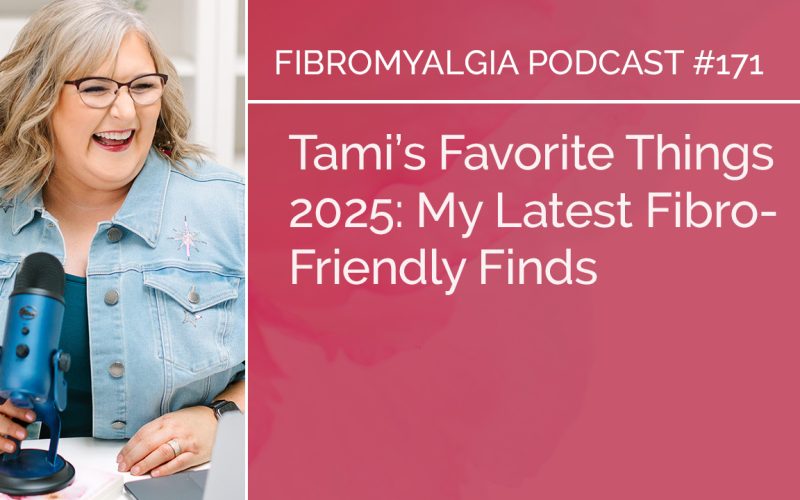
Episode 171: Tami’s Favorite Things 2025: My Latest Fibro-Friendly Finds

Have you ever wished people could truly understand what fibromyalgia feels like, or what it’s like to live with a condition that never really goes away? You are not alone. Explaining fibromyalgia to the people you love is one of the hardest parts of living with an invisible illness.

From the outside, you might look perfectly fine, but inside, you feel like you’ve been run over by a truck. It’s even harder when your symptoms change from day to day. You might manage errands or a social event one day and need to rest the next, leaving people confused or questioning what’s going on. Trying to explain that experience to someone who has never experienced chronic pain feels impossible.

Today, Tami is sharing tools you can use to make these difficult conversations a little easier without wearing yourself out in the process. Using the right strategies and language can make a world of difference. Whether it’s a simple analogy, a short story that captures the daily challenges, or setting clear boundaries around what you can and can’t explain, these conversations can make all the difference in whether you feel supported or alone.

In this episode, Tami shares why fibromyalgia is so hard to explain, how its invisibility, fluctuating symptoms, and emotional weight affect daily life, simple, relatable analogies others without chronic pain can relate to, the power of using tactile demonstrations to show pain and sensitivity, the Spoon Theory and other analogies to explain daily limits, sharing books and other media to educate others, how you can use stealth tactics to help your loved ones understand what you’re experiencing, understanding the three circles of trust, setting boundaries and learning to say no without guilt, resources that help with explaining fibromyalgia to children, how growing up with a family member with a chronic illness can teach empathy and resilience, choosing the right time and place to have these fibro conversations, accepting imperfect help and building a supportive team, why you need to create a flare survival plan, how professionals and coaches can help to improve your quality of life, and more.

Read More

Episode 170: How Do I Help People I Love Understand Fibromyalgia? (Ask the Coach)

Have you ever wished people could truly understand what fibromyalgia feels like, or what it’s like to live with a condition that never really goes away? You are not alone. Explaining fibromyalgia to the people you love is one of the hardest parts of living with an invisible illness.

From the outside, you might look perfectly fine, but inside, you feel like you’ve been run over by a truck. It’s even harder when your symptoms change from day to day. You might manage errands or a social event one day and need to rest the next, leaving people confused or questioning what’s going on. Trying to explain that experience to someone who has never experienced chronic pain feels impossible.

Today, Tami is sharing tools you can use to make these difficult conversations a little easier without wearing yourself out in the process. Using the right strategies and language can make a world of difference. Whether it’s a simple analogy, a short story that captures the daily challenges, or setting clear boundaries around what you can and can’t explain, these conversations can make all the difference in whether you feel supported or alone.

In this episode, Tami shares why fibromyalgia is so hard to explain, how its invisibility, fluctuating symptoms, and emotional weight affect daily life, simple, relatable analogies others without chronic pain can relate to, the power of using tactile demonstrations to show pain and sensitivity, the Spoon Theory and other analogies to explain daily limits, sharing books and other media to educate others, how you can use stealth tactics to help your loved ones understand what you’re experiencing, understanding the three circles of trust, setting boundaries and learning to say no without guilt, resources that help with explaining fibromyalgia to children, how growing up with a family member with a chronic illness can teach empathy and resilience, choosing the right time and place to have these fibro conversations, accepting imperfect help and building a supportive team, why you need to create a flare survival plan, how professionals and coaches can help to improve your quality of life, and more.

Read More

Episode 169: Holiday Tips For Fibromyalgia: Less Pain and More Joy

“You don’t have to do it all this holiday season. Do the things that matter most to you.” – Tami Stackelhouse

The holidays can be a difficult time of year for people living with fibromyalgia. Between shopping, cooking, decorating, family gatherings, and endless to-do lists, it’s easy to push yourself too far and end up in a massive fibro flare. You want to show up for the people you love, but your body will remind you that there’s only so much you can give.

Luckily, a memorable holiday season doesn’t just come from doing everything you’ve always done. Instead, it should be about doing what matters most. By learning to prioritize, pace yourself, and let go of the “shoulds,” you can create a season that’s joyful and supportive of your health instead of draining it. As we head towards the holidays, take your time, slow down, choose what feels right for you, and give yourself permission to rest without guilt.

In this episode, Tami talks about why it’s time to start thinking about navigating the holiday season, balancing energy and prioritizing what matters, planning buffer/recovery days before and after events, fibro-friendly food strategies, tips for eating safely, setting boundaries, mindset shifts for a less stressful holiday, time-savers to reduce stress this holiday season, why you should think ahead about dressing for comfort and creating a sensory-friendly environment for yourself, the impact of focusing on meaningful decorations and simplifying your holiday decor, the importance of accepting help, prioritizing joy over holiday “shoulds,” letting go of old traditions and creating new ones, and more. You’ll also get a sneak peek into the upcoming Living Well with Fibromyalgia Summit: Holiday Edition, featuring talks from Certified Fibromyalgia Coaches® on areas like balancing commitments, setting boundaries, and creating joyful new traditions.

Read More

Episode 168: Tonmya™ For Fibromyalgia: A Long-Awaited New Medication with Dr. Seth Lederman

Have you been hearing the buzz about the new medication approved for the treatment of fibromyalgia?

Fibromyalgia can come with a myriad of symptoms that make everyday life more difficult. With the limited pharmaceutical options available, the addition of another FDA-approved medication is a ray of hope. Tonmya™ is the first medication approved for fibromyalgia in over 15 years, promising a new option for those of us with fibromyalgia.

Today, Tami is joined by Dr. Seth Lederman, one of the co-founders of the company that developed Tonmya™, to talk about the journey from idea to FDA approval and what it could mean for the fibromyalgia community. With decades of experience in rheumatology, immunology, and drug development, Dr. Lederman has been focused on helping people with fibromyalgia for much of his career.

In this conversation, Tami and Dr. Lederman discuss his medical and research background, why he focused on fibromyalgia, advances in fibromyalgia research, the FDA approval process, why Tonmya™ targets non-restorative sleep and Dr. Harvey Moldofsky’s influence, clinical trial design, dosing studies, and FDA requirements, outcomes measured in trials and the focus on pain reduction and sleep challenges, challenges in developing Tonmya™ including high placebo response and financial risks, how Tonmya™ differs from Flexeril, side effects of Tonmya™ and how it compares to other treatments, how quickly patients may see benefits, tolerability and safety considerations, when Tonmya™ will be available and how it will be distributed, how patients can access Tonmya™ and find more information, efforts to make Tonmya™ affordable, the need for advocacy and raising awareness, future steps for Tonmya™, what you need to know about the criticisms of early Tonmya™ studies, and more.

Read More

Episode 167: Empowering Patients’ Lives: Introducing The Sherri Little Foundation

“Getting well can be expensive. Too often, the things that help us most are the things insurance won’t cover.” – Tami Stackelhouse

For too many of us living with fibromyalgia, our quality of life and access to care depend on what we can afford, not what we actually need. Coaching, acupuncture, mobility aids, functional testing, and even travelling to see the right doctor often aren’t covered by insurance. That gap leaves countless people stuck, unable to move forward on their healing journey simply because of finances.

This is why The Sherri Little Foundation was created. Founded in honor of one of Tami’s clients who recognized how financial privilege shaped her fibromyalgia care, the foundation provides micro-grants to help people with chronic pain get the support they need but can’t otherwise afford. From mobility scooters to travel expenses, accessibility modifications, or certain therapies, these grants are designed to remove barriers and give you the chance to reclaim your life.

In this episode, Tami discusses how financial barriers impact chronic pain patients, why The Sherri Little Foundation was created, Tami’s experience with out-of-pocket medical costs, Sherri Little’s story, the mission of the foundation to support those with limited resources, Tami’s personal connection to its work, the story of Lily, a 14-year-old grant recipient from 2024, examples of how grants have helped fill systemic gaps in accessibility and care, eligible uses for these grants, details of the 2025 grant cycle, including exactly how you can apply,  financial and age requirements for applicants, the application process, tips for preparing application materials in advance, how the grant selection committee prioritizes applications, how you can get involved and support the mission, Tami’s hopes for the future of the foundation, and more.

This year, the application window will open at midnight on September 1, 2025. The window will close on September 7, 2025, or when 50 applications have been submitted, whichever comes sooner. Tami expects the foundation to reach its application limit on the day of opening or the following day, so don’t delay!

Read More

Episode 166: Creating A Reliable Self-Care Plan That Works For You with Micky Beaton

“Self-care is the beginning of a path to hope.” – Micky Beaton

When life feels chaotic, self-care is usually the first thing to go (if it was even there in the first place). But for those of us living with fibromyalgia, that’s when you need it the most. Deprioritizing the practices and tools that help you feel your best will lead to fibro flares, more pain, and less energy, making it even harder to keep up.

Self-care doesn’t have to be complicated, expensive, or time-consuming. It doesn’t have to be treating yourself to something extravagant. At the core, self-care is about prioritizing your health and your body and treating yourself the way you’d treat someone you love. It means listening to your body, making small, deliberate choices that support your well-being, and letting go of the guilt that often comes with putting yourself first. When you make yourself one of your “favorite people,” you create the best chance for you to have a better quality of life.

Today, Tami is joined by Certified Fibromyalgia Coach® Micky Beaton to talk about how you can create a reliable self-care routine that is sustainable and fits into your life. Micky was diagnosed with fibromyalgia over 20 years ago and spent many of the years since searching for answers. Recognizing that there were many other people out there with fibromyalgia who needed the right support, Micky joined the Certified Fibromyalgia Advisor® and then Certified Fibromyalgia Coach® training programs.

In this conversation, Tami and Micky explore Micky’s diagnosis experience and early struggles with fibromyalgia, the push-crash cycle she found herself stuck in for a long time, her path to life coaching, further education, and discovering fibromyalgia coaching, why what works for one person may not work for another, finding positives in chronic illness, Micky’s ongoing learning and passion for coaching, her experience of mutual growth with clients since becoming a Certified Fibromyalgia Coach®, how coaching helps clients maintain self-care and accountability, creating flexible self-care plans, what self-care really means, myths about self-care, the connection between independence and community, practical tips for delegating and overcoming perfectionism, the importance of building a support team, the pillars of self-care, why you should be having conversations with yourself, how self-care became Micky’s passion, how self-care supports medical treatments and calms the nervous system, where to start with self-care without feeling overwhelmed, how to fit self-care into already busy lives, why it’s important to begin with easy actions and celebrate small wins, why you should trust in the process and stay hopeful, and more.

Read More

Episode 165: Fibromyalgia Stories of Hope & Healing #11

Subscribe: Apple Podcasts | Spotify | Amazon Music | Google Podcasts | Audible | iHeartRadio | Pandora | Subscribe on Android There aren’t enough stories out there of people who have fibromyalgia and who have found ways to feel better. Many of our doctors tell us there’s nothing we can do, and it’s not uncommon to…

Read More

Episode 164: Fundamentals of Resilience and Physical Independence with Angi McClure

“It’s never too late for your second spring.” – Angi McClure

Have you ever felt like you were losing your physical independence because of your fibromyalgia? Maybe you struggle with tasks like climbing stairs, carrying groceries, or getting up off the floor? For many of us living with fibromyalgia, even simple daily tasks can feel draining.

Strengthening your resilience is the key to adapting through life’s seasons. The good news is that, no matter what age or stage of your life you’re in, there are gentle, practical, and sustainable ways to reconnect with your body, build resilience, and enhance your physical independence.

Today, Tami is joined by Angi McClure, a neuro-based movement therapist and founder of Bamboo Bodies. Angi specializes in age science and supports her clients through functional Chinese medicine, nutrition, and seasonal lifestyle habits. While Angi’s work focuses on age training and longevity, the principles apply perfectly to those of us with fibromyalgia.

In this conversation, Tami and Angi discuss how Angi became interested in exploring age training and her personal and professional journey into supporting older adults, the parallels between aging and living with fibromyalgia, adapting to life’s changes, why we should redefine physical independence as an athletic pursuit, recognizing the resilience of those with chronic illness and pain, why “training like an athlete” is more about mental and emotional resilience than physical exercise, the meaning of neurological resilience, why community is a crucial element in reconnecting with your body, energy management and The Spoon Theory, seasons of life and how they relate to aging and fibromyalgia, insights from Chinese medicine on life’s seasons and their impact on health, the “second spring” and why it’s never too late to adapt, how Angi bridges neuroscience and Chinese medicine, why pain is a brain output, how mindset and working on yourself builds resilience, the “threat bucket” analogy for stress and pain, practical ways to lighten your load, practical tools you can start using to support resilience, how to find joy in movement, the need for a personalized approach to movement, the benefits of qigong and playful movement, and more.

Read More

Episode 163: The Top Three Hidden Reasons Your Fibromyalgia Symptoms Aren’t Getting Better

“Listening to your body is one of the key things you need to do to make everything else work.”

Over the past ten years of teaching people about fibromyalgia, Tami has seen certain issues come up over and over that get in the way of the healing journey. Last week, during our Certified Fibromyalgia Coach® training class, a student raised an important question about how we identify these issues when we have a client who isn’t improving as we would like them to.

The more you learn about fibromyalgia, the more aware you are of tools that could help you and why your symptoms may not be improving. At the same time, there are some less obvious issues that often go unnoticed, but which must be addressed to make progress. Things like working with a doctor who doesn’t quite know what to do with us, being in a season of life that doesn’t allow us to prioritize ourselves, or unconscious trauma responses that block us from making the changes we need to.

In today’s episode, Tami is sharing the top three hidden reasons why your fibromyalgia symptoms might not be improving. She discusses why not listening to your body can block healing (whether or not it’s unintentional), the key difference between consciously ignoring your body and being unaware of what it needs, the benefits of writing your body’s owner’s manual, how trauma can make it harder to manage your symptoms, acknowledging that rest and awareness are essential for healing, how undiagnosed or undertreated health conditions can get in the way of your healing journey, underlying conditions that Tami had to address as a part of her fibro journey, advocating for yourself and finding medical professionals who listen, how fibromyalgia amplifies other sources of pain, the importance of being realistic and managing expectations, why some people may not be ready, willing, or able to do the work required for improvement, when it’s okay not to do the work, support for those facing financial or geographic limitations, and more.

Read More